Easter Bread Surprise

“No, you have to hide the egg!” my twenty-two-year-old daughter demanded.
I was covered with flour, had been up since dawn and my hands were starting to go numb. I didn’t need my twenty-two-year old acting like a two-year-old unless she was planning to help me with the bread scattered throughout my sticky kitchen.
“But you already know it’s in the bread,” I pleaded. “And Nana didn’t hide the egg when I was a kid.”
“I don’t care. This is the way you did it when we were kids and this is how Nana did it for us. It’s our tradition. You can’t mess with it.”
“Ok, sorry. Next year, I will hide the egg, that you already know is in there.”
“Thank you,” she huffed, as if I should have known better.
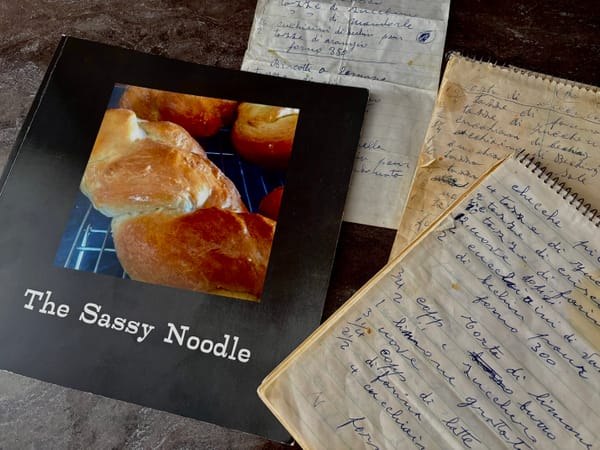
Perhaps I should have. When I was a kid through to when my mother passed, I took for granted that bread with a whole egg baked inside would appear at Easter. Unfortunately, I only took an interest in my mother’s old recipes after she passed and there wasn’t much to go on. That the recipes were written in scribbled Italian was the least of my problems. I called on her best friend, who often baked with my mom, to help me out.
Hoping I didn’t sound like an amateur, I asked, “Why is there no flour listed in the ingredients? I know there’s flour in there – it’s bread! But how much flour?”
“Oh, you’ll know,” she said.
I told her I would not know, so she sighed and gave me a starting point. “Start with eighteen cups of flour and work your way up. The dough will be sticky but be sure not to add too much flour.”
This was helpful but terrifying. How sticky? And eighteen cups for starters – I knew my mother made several loaves but how many loaves were we talking about? I had more questions but I was used to tackling ambitious baking projects – I could do this. And perhaps my mother’s friend was right and I’d just know.
The first time I made Easter Bread I planned to keep track of how much flour I used. I vowed not to hand down recipes with “you’ll know” as an ingredient. I started with eighteen cups and stopped counting at thirty-two. I guess there’d be a “you’ll know” in my recipes, too.
Trying to channel my mother’s baking expertise while ignoring her voice in my ear and her hovering over my shoulder, only added to my anxiety. While wishing she was with me, I knew she’d criticize and correct my technique, I’d get defensive and we’d end up in a shouting match. It’s no mystery I never mastered her recipes while she was alive.
She used to start this bread in the late evening while she waited for my father to get home from work at 1:00 a.m. She juiced about a dozen oranges by hand, scalded the milk, added butter and sugar and then let the mixture cool to lukewarm before adding the juice, beaten eggs, softened yeast and pure anise extract.
Only after she mixed all the wet ingredients with care did she start to add flour. But it was about that time of night that I’d go to bed, knowing that I would awaken to the pungent smell of anise mixed with the sweet and yeasty aroma of freshly baked bread.
The next morning, she’d complain that even though she’d gone to bed as soon as my father got home, with the dough kneaded, covered with an old flannel blanket and readied for its five to six hour rise, she hadn’t slept.
She’d gotten up multiple times to check the dough, worried that it would rise so much that it overflowed even her biggest bowl. Sometimes her fears were justified and I’d find her in the kitchen, telling me she’d been up since before sunrise to ready the dough for its next rise.
With a decisive hand, she punched down the massive dough ball and then worked through the dough, slicing one piece off at a time, rolling it into a long thick rope, folding it in half and then braiding the two strands to make a long loaf.
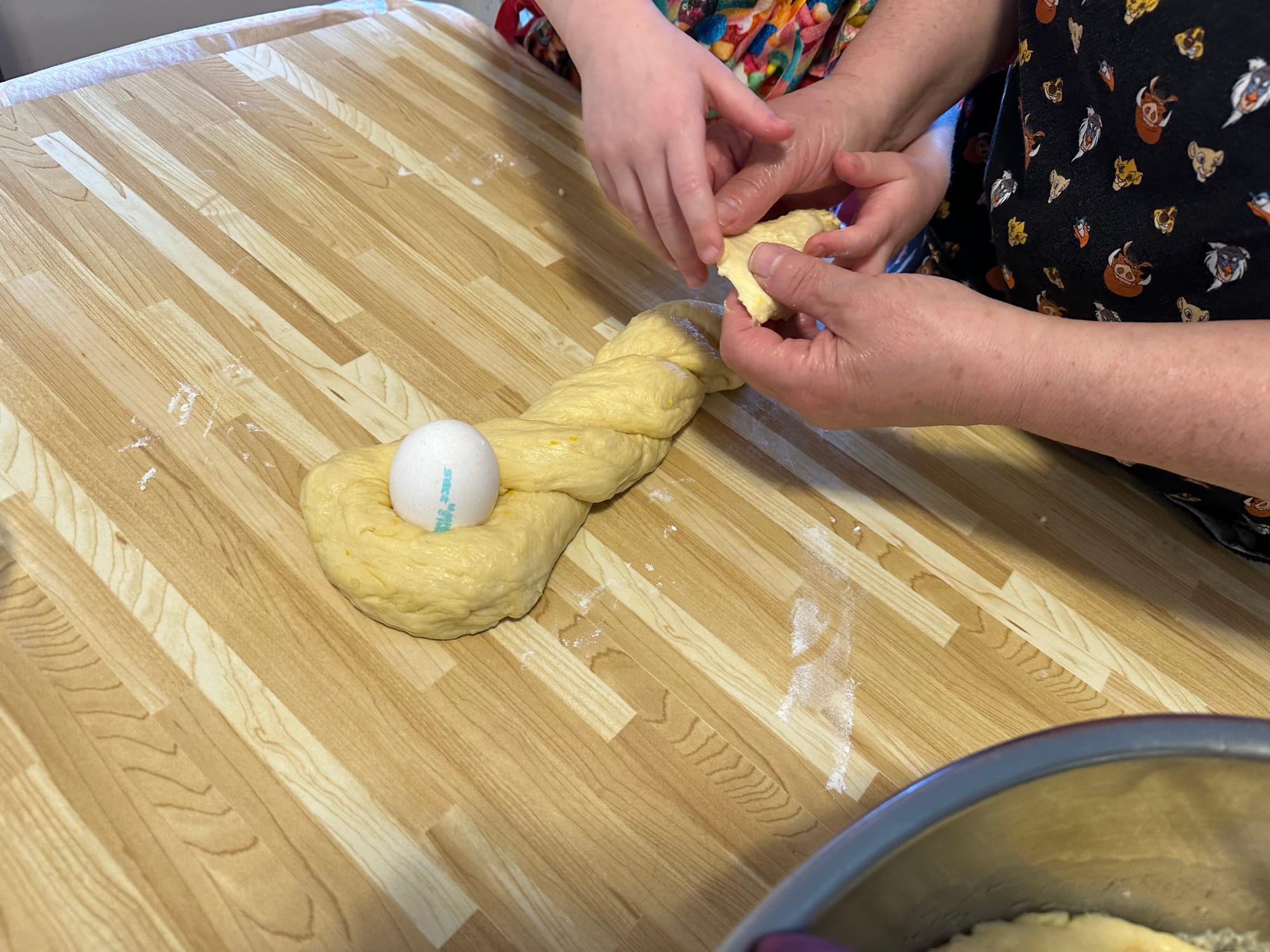
She always placed an uncooked egg, still in its shell, in the small hollow at the top of the braid. This was the step that fuelled the egg controversy.
When my brother and I were growing up, the egg remained in plain sight with the dough rising up a bit to nest it in place. Once grandchildren arrived, my mother thought it would be fun and mysterious to hide the egg by putting a thin layer of dough over it, making it disappear under the pillowy bread.
Hidden egg or not, there were always twenty or more loaves that rose again for another 90 minutes and occupied space on every available surface. The old oven fit three loaves at a time, so even after the baking began, the finish line was still far off.
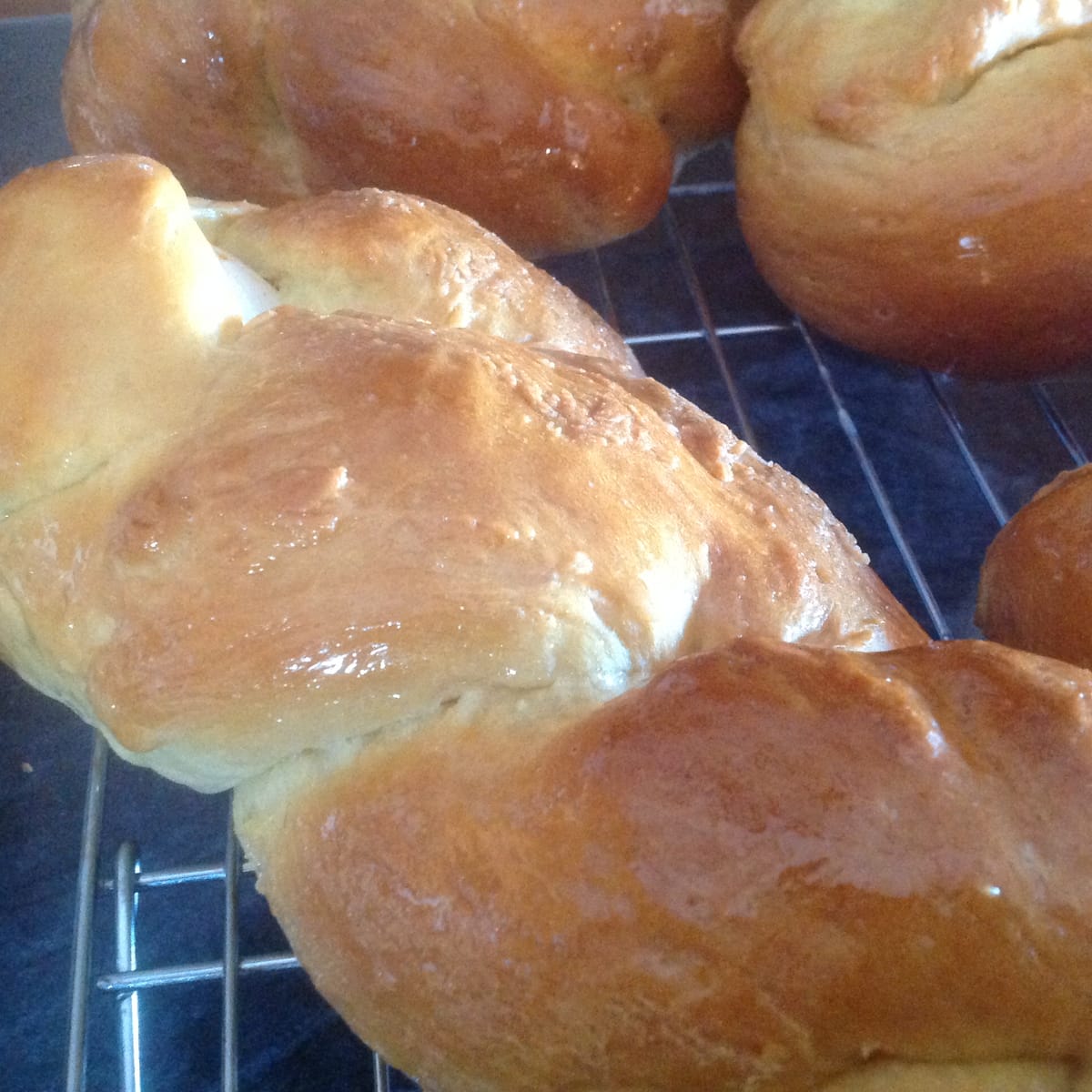
Once out of the oven, the crowning glory was a boiled milk and sugar glaze that gave the loaves their trademark shine and sticky exterior. We’d barely wait for the loaves to cool before pulling pieces off with our hands to savour the the unique texture of the bread at the juncture of the twists where the dough was stringy and candy-like.
In the midst of the production, someone was always dispatched to deliver a still warm, wrapped loaf to a relative, friend or neighbour.
My mother passed twenty-six years ago, and I started making this bread shortly after, inviting family over to enjoy it hot out of the oven and sending bread home with them.
I hid the egg as she had done for my children, until the year I decided to go back to the old tradition of an uncovered egg. After being reprimanded by my daughter, I reverted back to the way my children remembered, asking silent forgiveness for going against tradition.
As much as I felt pulled toward the custom of my childhood, my children only knew the hidden egg version. My mother had intended to create an aura of mystery with that hidden egg. And my kids loved it.
As if she knew I needed validation, my little cousin called me one day and asked how the egg got into the bread, to which I answered, “There’s an egg in there?”
Her mother told me later that her daughter’s eyes grew to twice their size. Yes, the mystery still worked. Who am I to mess with that?
Originally published on Quick Brown Fox March 2024.
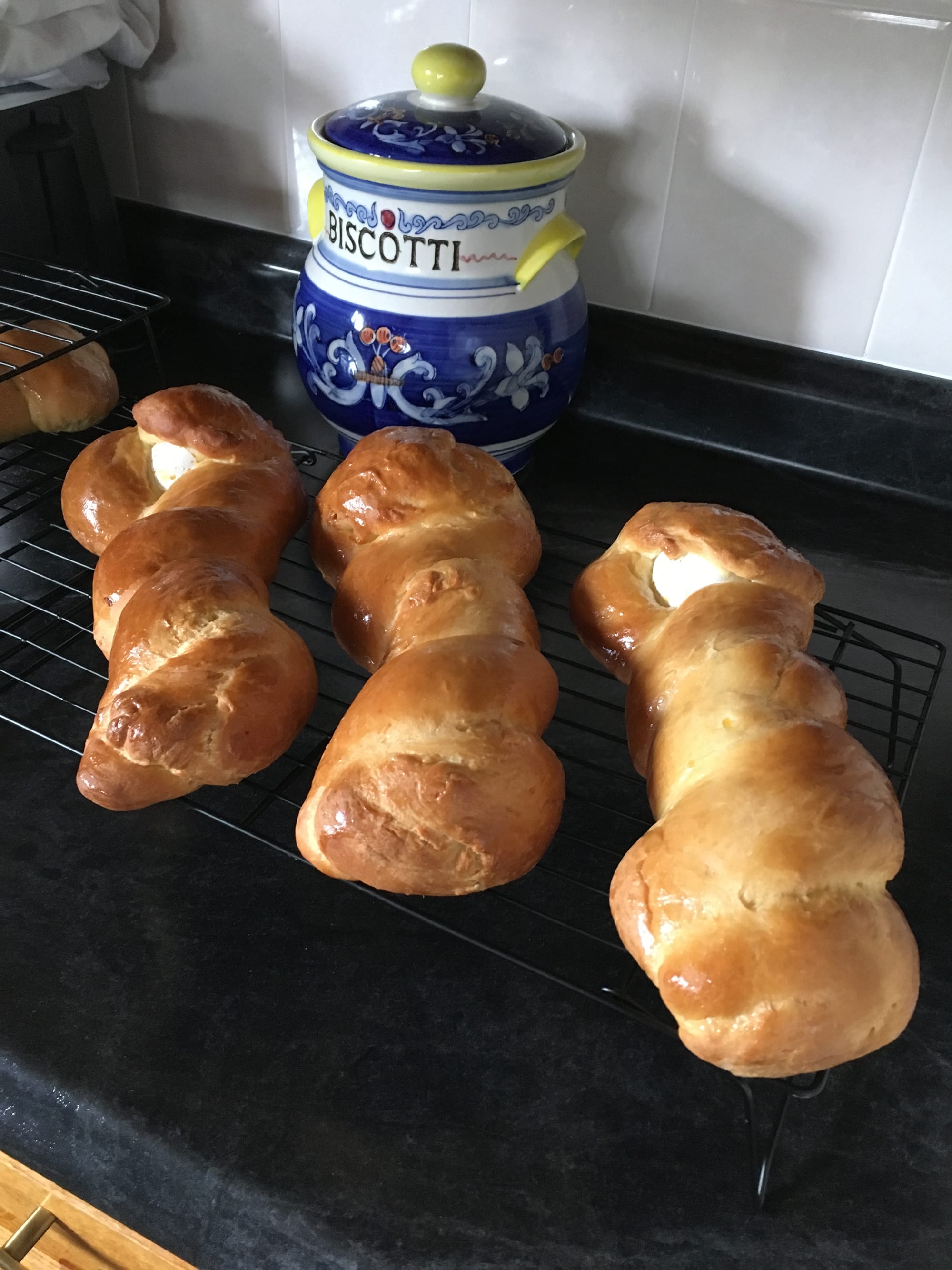
Easter Bread Recipe (Yield: About 22 loaves)
This old family recipe produces a sweet, stringy bread that is hard to describe unless you’ve had it. It requires a great deal of upper body strength to mix this much flour but it is doable. If you’re trying this for the first time, you may want to consider making a half batch at a time. It can be scaled down with great success and can be kneaded in a KitchenAid depending on the amount of flour your particular model will allow. I’ve made as little as a quarter of a batch using one tablespoon of yeast and one cup of water. You can also play with the yield by making the loaves a bit smaller as long as they are all somewhat uniform to ensure even baking.
Ingredients:
Juice of 12 Oranges (or about 4 ½ cups) (Florida Juice, Valencia, Navel or any oranges that yield a good amount of juice)
4 cups milk (see Notes for dairy-free or vegan version)
1 lb. (2 cups) butter (see Notes for dairy-free or vegan version)
4 cups sugar
2 heaping tablespoons active dry yeast
2 cups warm water
12 eggs (see Notes for vegan version) plus more if placing an uncooked egg in the braid (see Options)
3 teaspoons spirit of anise
All purpose flour – Start with 18 cups and increase as needed (approximately 30 cups)
Directions:
Oranges should be at room temperature. Juice the oranges and allow some pulp to go in. Scald milk. Add butter and sugar to milk and stir to dissolve on medium heat. Remove from heat and pour into a very large bowl. Cool to lukewarm.
Meanwhile, dissolve yeast in 2 cups of warm water. Set aside to allow yeast to activate. Beat 12 eggs and add them to the lukewarm milk mixture. Add orange juice, yeast, and anise. Mix well. Add 18 cups of flour and mix well. Gradually add and stir in enough flour to make a very soft dough. Place dough onto a large lightly floured board and knead in more flour as required. Dough should be very soft and a bit sticky. Toward end of kneading, oil hands and knead a few more times. Place dough in a lightly oiled, very large bowl. Cover and let rise for 4 to 5 hours. This first part takes about 90 minutes and if you prefer, it can be done the night before (start around 11:00 p.m., then get up around 5:30 a.m.). Do not place the bowl near the edge of a table/counter in case the dough rises so much that it flows over. This has happened to me!
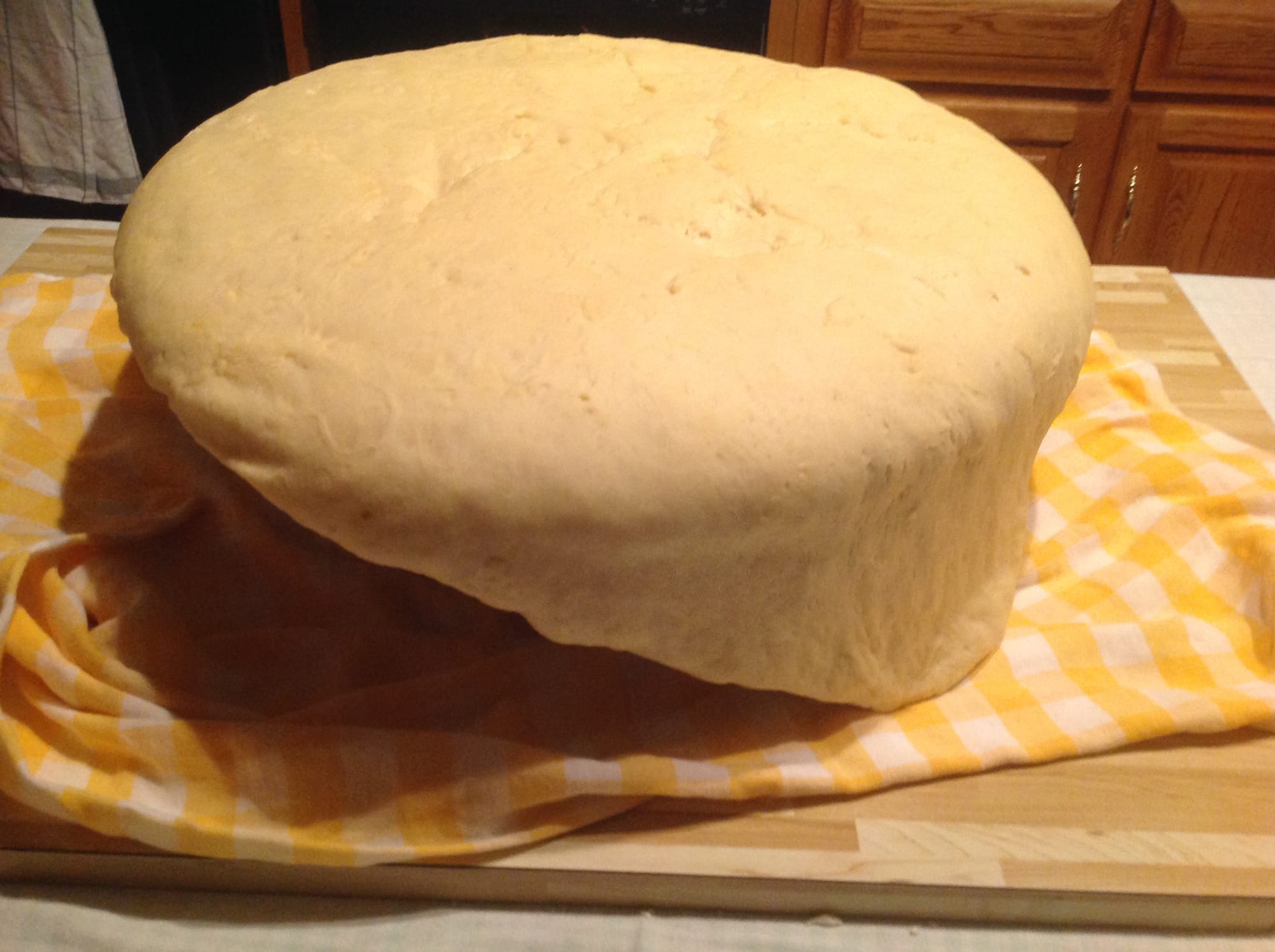
Punch the dough down and let it rest for a couple of minutes. Line large pans with parchment paper. Oven liners can be used and should be lightly dusted with flour. Keep a small bowl of oil nearby. Cut off a piece of dough, oil hands and roll into a long rope. Fold it at the halfway point so you have a right and left log of dough, then starting at the fold, braid the two halves over each other to create a twisted log. Place on pan and repeat with remaining dough. Cover and let rise 60 to 90 minutes.
Options:
Place a whole egg (unboiled, shell on) in the middle of the fold before twisting. Twist each side as described above. Cover the egg with a bit of dough for the surprise effect.
To make rounds instead of logs, form a circle with the twisted log, pinch the ends closed, and put a glass in the hole to stop it from closing up while rising. Remove glass before baking.
Preheat the oven to 290 convection if using multiple racks or 300 for regular oven (one rack at a time) and bake for 45 minutes. Ovens vary so you may have to adjust temperature and baking time.
Cool slightly, then brush with a mixture of scalded milk and sugar.
Once cooled completely, this bread freezes well by wrapping it in wax paper and then placing it in airtight freezer bags. It is delicious on its own or toasted with margarine, honey or your favourite jam. It also makes incredible French toast.
Notes:
For a dairy-free version, use Unsweetened Almond or Soy Milk and plant-based butter.
For a vegan version, follow dairy-free instructions and substitute flax eggs for eggs (mix 1 tablespoon ground golden flax seeds and 3 tablespoons water for each egg).