My Career as a Sound Technician

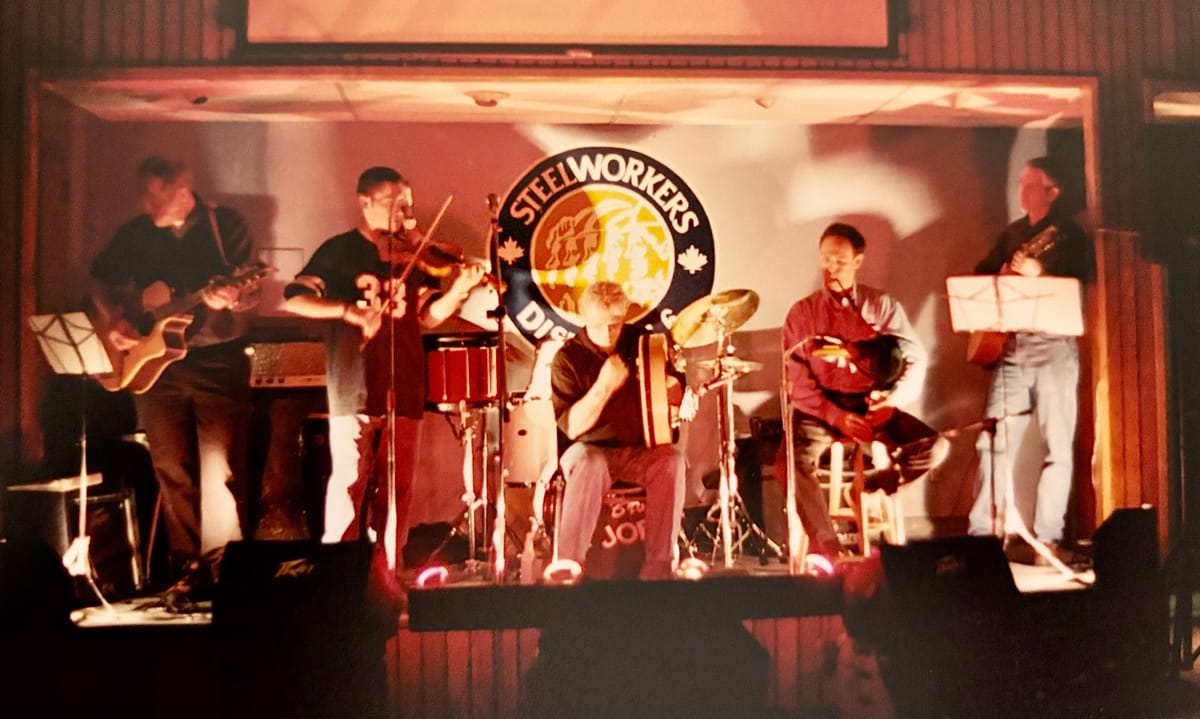
A number of years ago, my husband, our son, and some friends, formed a Celtic band. Their repertoire consisted of Irish and Scottish music and collectively they played highland bagpipes (the loud ones), shuttle pipes (a quiet, easier on the ear bagpipe), guitar, fiddle, and percussion. They welcomed opportunities to perform in public in our small community, often volunteering to play at retirement homes and fundraising events. Sometimes they had larger gigs and were a crowd favourite at our local highland dance events where our daughter also performed. In addition to my day job as a project manager, I was often chauffeur, road crew, and groupie for their performances, where the audiences were filled with familiar faces of friends and family.
The band struggled to get good sound dynamics at larger venues. It was difficult to get the right mix between highland bagpipes, that were loud enough without amplification, and the other instruments that needed some help to be heard. The unique softer sounding shuttle pipes were especially tricky. The group was invited to perform at a highland dance recital and pub night in a local banquet hall and planned to add a guest vocalist for the first time. She was to sing a few tunes in the first set.
They started their search for a sound technician, not expecting to find one that understood their needs. I had some music in my background and enjoyed listening to them rehearse in our basement every week so I knew the sound they were looking for and appreciated their challenges. In frustration, at one rehearsal, one of them said I could likely do a better job than their past hires.
As the performance drew near, I asked my husband who they’d chosen as their sound person, expecting they had coached one of their previous ones to get a better result. My husband gave me a surprised look, pointed at me and said, “Well, you of course.” I hoped he was joking. He assured me it would be fine and he’d set up the controls for me in advance. All I had to do was monitor the sound and watch for cues from the band. He made it sound so simple.
The day of the performance, I accompanied the band to rehearsal and sound check. They’d rented a sound board and this was the first time I’d seen one of these very intimidating things up close. My husband explained the multitude of levers and knobs and walked me through the difference between monitors and microphones, also explaining that a room full of chattering people would have an impact on the sound. This meant I might have to adjust a few things on the fly but he was sure I could handle it. The vocalist was unable to make the rehearsal but we decided we could make last minute adjustments before the show.
Things went well in the first set, where the piper stuck to the highland pipes so he didn’t need a microphone. The vocalist came on at the end of the first set and we did a quick sound check. Her tunes went well and I was quite relieved and kind of proud of myself. The band members were happy and I polled some friends in the audience, confirming that the sound settings were working.
At the beginning of the second set, the piper took his place at the microphone the vocalist had used. He donned his shuttle pipes, the much quieter version of the highland bagpipes, and started to play. Watching the frown on his face and the tilt of his head, I knew right away that something was wrong. He was getting no sound or too much sound from the monitor, his microphone was or wasn’t turned up enough, and he could or couldn’t hear the other instruments. I had no idea which one of these or which combination it was but I knew something was terribly wrong. Some of the other band members were giving me cues but the jerky thumbs up, thumbs down gestures were not helpful. Also not helpful was the audience member who appeared beside me, also stared at the board, and complained he couldn’t hear the pipes. The transition from vocalist to shuttle pipes had not gone well.
I was thankful I had my back to the audience full of friends and family but their loud and merry chatter made it even harder to figure out which direction to slide levers or turn knobs. To make matters worse, we started getting ear-piercing feedback. I stared at all those controls and they just stared back, mocking me and confirming my worst fears. I had ruined the second set and I was no better than their former sound people.
The only good part of the evening, besides my eventual release from the grips of the sound board, was when the guitar player handed me a much needed adult beverage, thanked me, and told me I had done a good job. Although this meant a great deal, I did not quit my day job, and was happy to go back to being chauffeur, road crew, and groupie while the band continued their search for a sound technician.