The TV Died for a Year
I avoid cemeteries, my serious stories detour into humour, and I leave the room at breakneck speed (mentally, if I can’t get to an exit in time) when the conversation turns to dead people, soon-to-be-dead people or forecasted-someday-soon-to-be-dead people.
I avoid cemeteries, my serious stories detour into humour, and I leave the room at breakneck speed (mentally, if I can’t get to an exit in time) when the conversation turns to dead people, soon-to-be-dead people or forecasted-someday-soon-to-be-dead people. When I hear comments like “Have you seen him? He looks like he has one foot in the grave!,” my first instinct is to bolt. Perhaps my childhood didn’t equip me to process impending doom. I don’t like to be sad.
I grew up in a small city in Northern Ontario, in a traditional Italian household where children weren’t included in death. It was feared and whispered about and questions were forbidden. I was nine years old when my grandmother died. My parents shuffled my younger brother and I off to stay with neighbours during the day. But when we were allowed to come home, we had to pass through the dining room to get to our bedrooms. There were women dressed in black and men wearing black armbands sitting around the edge of the dining room. They didn’t sit at the table, though. That could be misinterpreted as socializing with expectations of food and wine. After offering condolences, nobody spoke. They sat motionless, didn’t make eye contact, and their odd sniffles were the only thing that broke the silence.
After days of the silent sitting ordeal, I ran away from the neighbours’ when I heard someone say my grandmother was in the house. “Nanna Rosa? Dead in the house?” I had to see this for myself, but when I got home, it was still only the silent sitters. My mom’s narrowed glance made it clear that I’d best return to Elena’s house if I knew what was good for me. It turned out that they had taken Nanna Rosa to the funeral home and my nine-year-old ears only heard the “home” part.
Once the funeral was over (I wasn’t allowed to attend for fear of being traumatized or, more likely, subjecting my parents to my customary insistent questions), I thought maybe we could all get back to normal. My grandmother never spoke to me when she was alive, unless she needed her water glass filled, so I saw no need to draw this out.
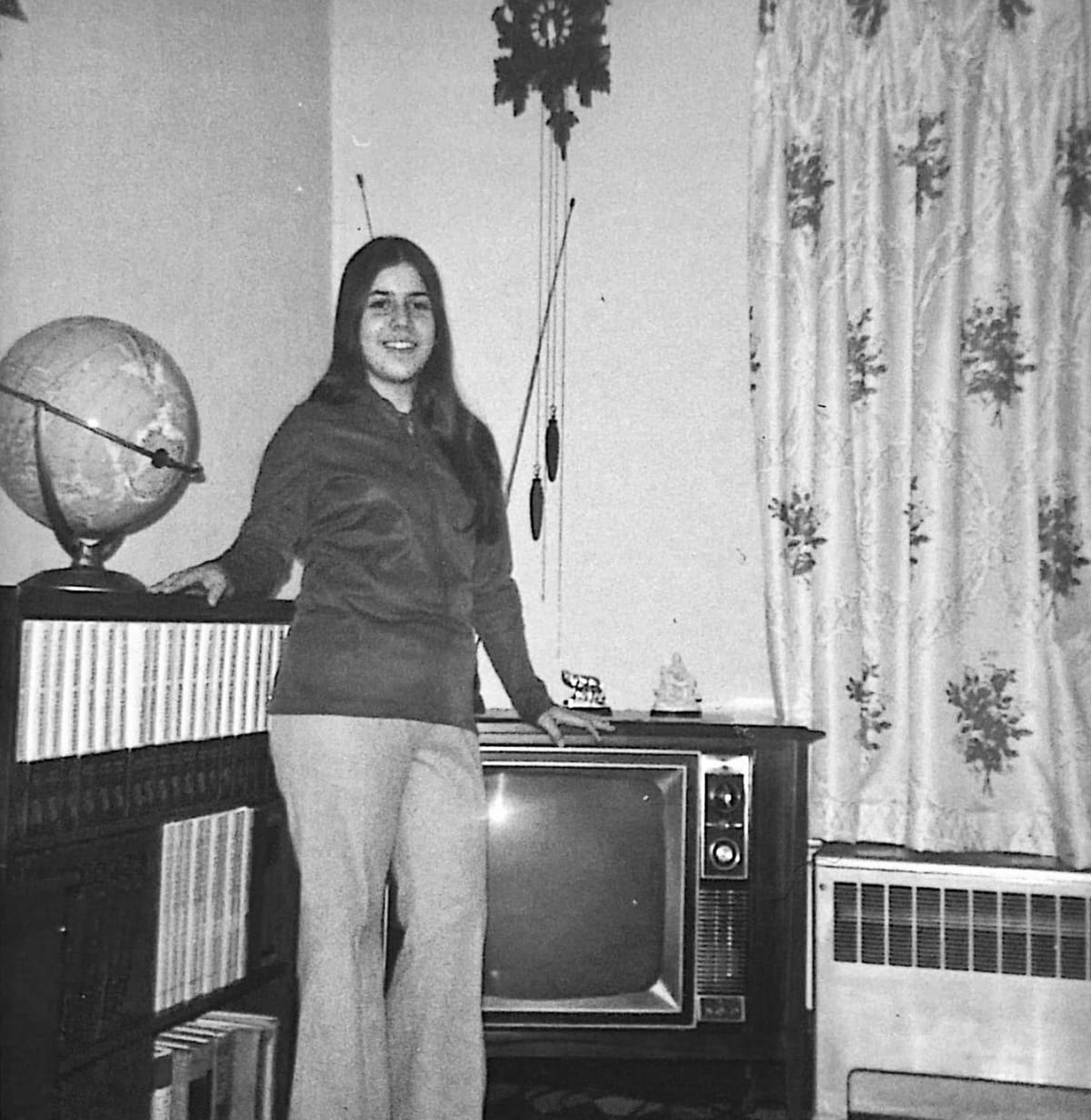
The first clue that I was mistaken about the notion of getting back to normal was the television ban. We couldn’t watch TV for a year. Any form of entertainment, laughing, or living was banned in the name of respecting my dead grandmother. For a year, I couldn’t watch my beloved Boston Bruins, and Samantha and Darrin carried on without me on Bewitched. Even Christmas was cancelled.
My brother and I did our best to amuse ourselves with quiet games like cards, Monopoly, and marbles but a year was a long time to fake being sad. Visiting friends was on the list of banned activities, so our attempts to sneak TV time and general happiness from another household were futile. We were able to go over to my uncle’s house after a bit of time passed. While I was thrilled to see my cousins, even if we couldn’t giggle, chase each other, or use our outside voices, their TV was in mourning, too.
Attending weddings as a family was also forbidden but my brother or I were allowed to attend to bring the envelope and represent the family. We went with a relative distant enough to be excused from the happiness ban or with heavy mourning exempt family friends. I still looked over my shoulder every time I laughed, though. I knew my mother and she had spies everywhere.
The silent sitters returned when my grandfather passed. The same men and women came and sat against the walls of the dining room. I was 15, my brother 13 and we weren’t shuffled off to Elena’s house, but were still excluded from death proceedings. My brother and I braced ourselves for another year without television. When I was nine, my cousins were my best friends so we thought this was the way it was in all families. But at age fifteen, I was ready to fake it when my classmates talked about the shut-out in the hockey game or Keith and Danny’s antics in the latest Partridge Family episode. Being Italian made me different enough. All I needed was for my friends to discover our weird death customs. If they had asked me who thought up this television ban, I couldn’t answer them. They didn’t even have televisions in Calabria where my parents were from!
My brother and I sat moping around the quiet house waiting for our parents to return from the funeral. When they arrived, my dad came into the living room and, without uttering a word, turned the TV on and walked back out. He was never one to stand on ceremony. I realized then it was likely my grandfather who insisted on the TV ban when my grandmother passed.
The first death I was admitted to was ten years later when my father-in-law passed. When I was on my way to meet the family to put the finishing touches on the funeral, my mother asked, “Will you be okay? This is your first, after all.”
I wasn’t worried about being okay until she asked. Accusatory answers popped into my head, “Maybe if you’d prepared me, you wouldn’t have to ask?” and such, but I decided this was not the time. Instead, I described the casket the family chose and compared it to my mother’s beloved oak hope chest. She interrupted me with a moan, a bristle, and a shudder but how was I to know it was an inappropriate comparison? My upbringing had made me socially awkward with death.
When the time came for visitations, I couldn’t figure out what all the fuss, fear and whispering of my childhood was about. My father-in-law was special to me and he died too young after a short illness. But my grief and deep sense of loss were at odds with the suit-donning facsimile that lay surrounded by satin and looked as though it had makeup on. I felt duped. Fear wasn’t among my emotions and this unsatisfactory likeness didn’t make him present. My real father-in-law was sitting in his favourite chair, wearing comfy clothes and sharing old stories with a friend over a glass of Scotch. A year later, at my dad’s funeral, it took all my self-discipline to resist wiping the rouge from his cheeks and refrain from laughing when one of the older relatives pulled me aside and asked, “Doesn’t he look good?”
“For a dead guy, you mean?,” was the first response that came to mind. I held back. My dad wouldn’t approve of my boldness, even though he despised funeral fanfare. He used to say, “Treat me well while I’m alive. Don’t put on a show when I’m dead.”
I still avoid cemeteries and conversations about death. But when someone passes, I grieve in private, speak in my outside voice in public, and watch TV without guilt.
Originally published in Spellbinder Literary Magazine, Autumn 2024 issue.